Pages

Friday, January 28, 2022

Life at the Boundaries

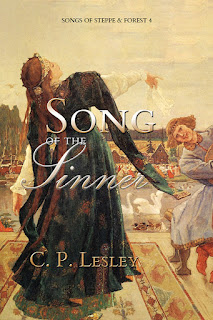
The big news for this post is the release of Songs of Steppe & Forest 4, which I mentioned as imminent last week. On the surface, Song of the Sinner follows the star-crossed love affair of Anfim Fadeyev and Solomonida Sheremeteva, characters who have played bit parts in this series and its predecessor until now. But like most fiction, it also addresses a deeper problem: in this case, the belief held by so many women that a child’s needs are more important than a mother’s—or at least that a mother can satisfy her own needs or her child’s, but not both. The social difference between Anfim and Solomonida exists to spark this inner conflict, bringing it into the light so that it can be acknowledged, explored, and eventually resolved.

Of course, in our relatively liberal world, where money confers status and birth plays a role mostly as a marker for racial discrimination and multigenerational poverty, Anfim’s background (priest’s son, merchant, civil servant) may not seem so distant from Solomonida’s rank as the daughter of a noble clan. She has land and servants; he has cash and, increasingly, connections. Doesn’t that make them more or less equal—complementary, even?

In sixteenth-century Europe, though, “blood” trumped money and skills every time. The language speaks for itself: blue blood, good blood, noble blood, royal blood—as if just being born into a family with a long genealogy could make a person clever or interesting or creative. So for Anfim and Solomonida, the difference in their station represents a real obstacle, one they must surmount, evade, or ignore. Their personalities and past experiences further ramp up the conflict. As the son of a priest, Anfim learned early to lie low and follow the rules, even when he’s on a quest to succeed. Solomonida married young to a man chosen by her father, a husband who looked good on the surface but proved vicious and uncaring toward those he considered beneath him. She survived and even escaped the worst of her husband’s excesses, but she fears giving anyone else that kind of power over her.



Moreover, when Solomonida and Anfim do—for reasons explained in the novel—realize that the costs of remaining mired in the past and constrained by society outweigh the benefits of breaking the rules, their decision has consequences, not all of them pleasant. Solomonida’s daughter feels betrayed; her cousin regards her as a loose and foolish woman and ramps up his plans for revenge; the noblewomen’s wives refuse to visit her in her new home, imperiling her efforts to find the right husband for her beloved child.

This novel is, at its heart, a romance, so in the end Solomonida and Anfim find a solution to their dilemma. In this novel, as in most romance novels, the driving question is not where the hero and heroine will end up but how they will get there, and which obstacles they will encounter along the way.

But their particular problem gets to the underlying heart of this series. In Legends of the Five Directions, every heroine—and every hero—married in what our ancestors considered the “proper” fashion: a spouse selected by the two sets of parents to fulfill specific economic or political goals of the family as a whole. But even in the sixteenth century, some people failed—or refused—to follow the rules. I set out in the new series to explore the escape routes available in every society, no matter how traditional. Juliana, in Song of the Siren, is a high-class courtesan; she married for a short time in search of security, but when her husband abandoned her, she left him without a second thought. She’s not looking for a replacement. Grusha lives as a single mother and supports herself and her son by working as a shaman, another traditional alternative for those whose gender identities or life choices deviated from the rigid categories that our ancestors defined as the norm. Darya toys with the idea of joining a woman’s monastery, which is the Christian version of an escape through religion. Her eventual rebellion, though, is to marry a man she loves—of her own rank and selected by her father but not someone who will satisfy the ambitions nurtured by the head of her clan. Solomonida’s tussle with her emotions, her unwanted realization that she has committed herself to someone of lower rank, could happen to anyone, married or single. But in her case she is also taking advantage of the greater freedom allowed to widows—first by avoiding remarriage altogether, then by going after a man whom many of her friends and relatives consider unsuitable.

Future books in the series will continue to explore the edges of this system. At the moment, I envision an interfaith marriage, a runaway bride, a cross-cultural union, and the sixteenth-century equivalent of a career woman who may not choose to start a family at all (although my heroines have a way of falling in love even when I expect them to do otherwise). Even in a past filled to the brim with kings and generals, abbots and cardinals, knights and their dutiful wives, we also find women warriors, queens and midwives, a female pope, and tradeswomen, physicians, and artisans of all varieties. Theirs are the stories I love to tell.



To find out more about Song of the Sinner, the best place to start is the dedicated book page on the Five Directions Press site. There you can find an audio excerpt, an online preview, a summary, and purchase links. Until Song of the Storyteller appears around this time next year, this new book is also featured on the home page at my own site. After that, you can find it on the series page, where the earlier novels are already listed.

Or just stay tuned, as I’ll be talking more about the new novel here as the weeks go by. It’s tremendous fun to release a new novel, but just getting it out doesn’t do much. What makes the whole experience of publishing worthwhile is helping a book find its readers! 

Images: Song of the Sinner book cover © C. P. Lesley and Five Directions Press; Sergei Solomko, The Seventeenth Century, postcard ca. 1880, public domain via Wikimedia Commons; screen shot from Nomad: The Warrior (2005), dir. Sergei Bodrov.


Friday, January 21, 2022

Treading Water

Or was it more like submersion? Not sure how a week where I only worked two days got so crazy, but somehow it happened. Work spilled over into my leave time and prepping for, then recovering from, a routine medical exam gobbled up every other spare moment, leaving me here on Friday afternoon with no good ideas for a post.

But since I have not missed a single Friday since I began the blog in June 2012, I’m writing in to note that I’m still here and I’ll be back next week with more to say.

Meanwhile, Song of the Sinner (Songs of Steppe & Forest 4) is now officially out in print and available for preorder for Kindle, due for release on Tuesday. Stay tuned for more information on that next week.

I also interviewed Deanna Raybourn  this week for the New Books Network. We discussed her latest novel, An Impossible Impostor, due February 15, and the Veronica Speedwell series more generally. There’s even a (very) brief mention of a contemporary novel, due in September, titled Killers of a Certain Age. I’ll be posting more about that conversation when the interview goes live around the release date. But I can only hope that she had as much fun during that hour as I did.

And if you missed my previous post about Jinny Webber’s Bedtrick, check out today’s LitHub post about the book, which includes the New Books in Historical Fiction interview and a transcript.

Have a great weekend, everyone. See you next Friday!

Image purchased via subscription from Clipart.

Friday, January 14, 2022

Gulag Ballerina

On February 2, 1938—late at night, as was the custom—the Soviet police, then known as the NKVD, arrested a suspected German spy in Leningrad. Stalin’s Great Terror was well underway, meeting arbitrary targets set from the center the previous summer: 268,950 arrests, which should lead to 72,950 shootings and 196,000 prison sentences (8–10 years each) within four months. The specificity of the numbers is itself astonishing, not least because it emphasizes the state’s complete disinterest in the guilt or innocence of the accused.

In this case, the person arrested was Nina Anisimova, an acclaimed character dancer and budding choreographer at the Kirov Ballet. She was one of several dancers investigated for past contacts with one Evgeny Salomé, the legal consultant to the German consulate in Leningrad. Salomé, in turn, was a Soviet citizen of German extraction who appears to have been the kind of avid fan that Russians call a baletoman (ballet maniac). He liked to throw parties and invite the cultural elite of 1930s Leningrad, especially if they knew their way around a pointe shoe.

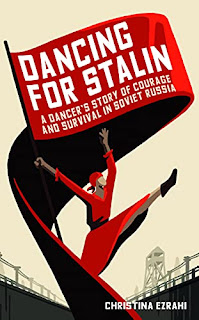
As Christina Ezrahi notes in her remarkable new book, Dancing for Stalin: A Dancer’s Story of Courage and Survival in Soviet Russia (London: Elliott & Thompson, 2021), there is no evidence that Salomé spied for the Germans. Still less is there any reason to suspect Anisimova of anything worse than knocking back a flute or two of champagne in the wrong company. She had even broken off contact with Salomé in 1934. But her arrest came during the height of persecution in Stalin’s Russia, and Anisimova spent months in detention, followed by a sentence of five years in a labor camp in Kazakhstan. She arrived at the transit camp in October 1938, after a nightmare journey aboard a cattle car, and narrowly escaped a further transit east.

So far, this is a tragic story but not, alas, an unusual one—as the records of the Memorial Society in St. Petersburg, so recently closed down on orders of the Russian government, make clear. But Anisimova’s story did not end there. Her husband, also an artist with the Kirov albeit not a dancer, bent heaven and earth to secure her release—risking his own life and freedom by lodging complaints at all levels of the political hierarchy. Seven months after Anisimova arrived in Kazakhstan—where, in a bizarre twist, she survived by dancing for her captors—her husband’s petition hit the right desk on the right day, and she was summoned back to Leningrad for a review of her sentence. By the end of September 1939, the NKVD had overturned her conviction, releasing her to return to the Kirov, where she continued to dance and to choreograph into her fifties (she was twenty-nine at the time of her arrest).

Life was not smooth sailing even then. In June 1941, Hitler invaded the Soviet Union. The Kirov was evacuated to Perm (Molotov, in those days), and Anisimova went with them. But thanks to poor timing and perhaps other factors, her husband and sister stayed behind, narrowly surviving the Siege of Leningrad and the famine that made the winter of 1941 hideous.

Meanwhile, in Perm, Anisimova began work on the ballet Gayané, her greatest triumph—performed to music by Aram Khachaturian and a libretto by her husband. Russian troupes still dance it, although it has never established a foothold in the West.


In the decades that followed her rehabilitation, the two years that Anisimova spent in detention were erased from her record. Ezrahi learned of them only through an archival file that landed on her desk by mistake. From there she pieced the story together.

This is, however, more than the story of one courageous and wrongly accused woman and her steadfast, loving husband. Through Ezrahi’s fluid and captivating prose, readers learn about Anisimova’s suffering but also about the realities of the Gulag; the cynicism of the mass arrests and repression; the Kazakh famine (like the better-known Ukrainian Holodomor, the result of poor state planning and malicious neglect); Soviet prejudice against anyone with ties, however weak, to the previous regime; and much more.

Although we regret and deplore the death and suffering of millions, it is the nature of the human brain to react most strongly to the plight of individuals. This is why reading fiction builds empathy: it draws us into someone else’s emotional experience. The best histories have the same kind of impact. Dancing for Stalin is that kind of book, and even if you’ve never tackled academic history before, give it a try. You’ll be glad you did.

Image: Modern performance of Gayané, © Karen Yan, Own Work, CC BY-SA 3.0 via Wikimedia Commons.

Friday, January 7, 2022

Vicious Secrets

Most novels depend on secrets. Even where protagonists are completely honest with each other—which they most often aren’t, because their goals do not align, they have yet to establish a trusting relationship, or they lack crucial pieces of the puzzle—there will be other characters who withhold information for various reasons. And in the rare cases when all the players make their goals crystal-clear from the beginning, as can happen in an adventure story, only the author knows how the conflict will resolve itself—and then often not until after reaching the end of the first draft. We may guess that the hero or heroine will come out on top, but the question of how must remain unresolved for most of the story. Otherwise, a plot lacks tension, and readers have nothing to draw them in and keep them hooked until the end.

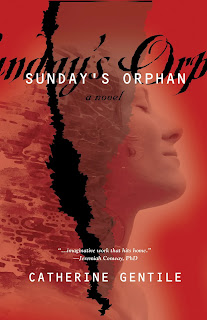
It’s the depth and kind of secrets that separate one type of novel from another. In Catherine Gentile’s Sunday’s Orphan, the subject of my latest interview on New Books in Historical Fiction, the secrets are deeply buried, profoundly shameful, and have to do with family and identity (the best kind, from a novelist’s perspective, because they offer the most complexity, nuance, and ambiguity). And although all the clues to those final, shattering revelations are present in the opening scenes, the journey is as emotionally fraught for the reader and the discoveries as shocking as they are for the imaginary people involved.

To say more than that would be to spoil the thrill of discovery. Read on to get a sense of the setup, then listen to the interview. But of course, the only way to discover the secrets is to dive right into the book.

The rest of this post comes from New Books in Historical Fiction.


Even for someone trained from birth to manage a farm, stepping into an inheritance at the age of twenty is not easy. Yet this is the situation facing Promise Mears Crawford when Sunday’s Orphan opens in 1930. Trouble comes at her from many directions. Her adoptive uncle, Taylor Crawford, constructed his farm according to the principles of racial equality, in defiance of the Jim Crow laws in effect all around him. Taylor had the standing to resist opposition from his neighbors, but Promise lacks both his stature and the resources she needs to fulfill the obligations he took on. Her financial constraints land her in conflict with the farm’s foreman, Fletch Hart, a long-time friend whose dreams of becoming a physician she cannot support due to lack of funds.

But the potential loss of Fletch’s friendship pales in comparison to the threat posed by the arrival of Daffron Mears, a self-appointed Jim Crow enforcer whose propensity for vigilante violence is well known throughout the county. Daffron wants a job—in fact, he wants Promise’s farm, which he regards as stolen from him by Taylor—and he is not above manipulating Jim Crow laws to get his way. He implies that he will report Promise to the authorities if she turns him down while giving work to Fletch, a Black man.

To protect her friend, Promise agrees to Daffron’s demand, if only for a week. But Daffron’s return to the farm that he left twenty years before sets off a series of crises that cast doubt on everything Promise thought she knew about herself and her origins.

Catherine Gentile admits in our interview that this was a difficult novel to write. For the same reasons, it is a difficult novel to read. But its unflinching portrayal and beautifully written exploration of a topic too often buried beneath platitudes about the need for change and its particular relevance to the questions of racial injustice that have been front and center the last two years make it an important book.

Friday, December 31, 2021

Winter 2021-22 Bookshelf

As the old year gives way to the new and the days slowly, slowly lengthen, it’s time to check in on some of the books destined to occupy my evenings for the next few months.


Christine Ezrahi, Dancing for Stalin
(Elliott and Thompson, 2021)
Although it’s true that I mostly read historical fiction these days—with my podcast channel, it’s hard to find time for anything else, and I enjoy visiting the past without having to worry about its dirt, quack medicines, and misogyny—I do occasionally tackle nonfiction. This study of a Soviet ballerina and choreographer sentenced to the Gulag in 1938 but eventually freed and returned to her former position thanks to her husband’s tireless efforts on her behalf, is a major draw for me. In addition to the human interest angle, I have loved ballet for as long as I can remember, read and enjoyed the author’s Swans of the Kremlin, and spent several years researching the life and times of Agrippina Vaganova, who revolutionized Soviet dance education between 1917 and her death in 1951. I look forward to learning more.


 Andrea Penrose, A Question of Numbers
(Andrea Penrose, 2019)
In addition to her Wrexford & Sloane mysteries, featured in last month’s interview with the author for New Books in Historical Fiction, Andrea Penrose self-publishes a second series set in Regency England, this one featuring Lady Arianna Hadley and the Earl of Saybrook and originally put out by Signet/NAL. This series focuses more on the political intrigues associated with the Napoleonic Wars. Lady Arianna, the daughter of a disgraced earl who absconded to Jamaica to escape his creditors, has an unusual past for a society lady and a talent for flirtation and deception, as well as an instinctive grasp of mathematics. On several occasions she also doubles as a chef—in male clothing, of course.

Lord Saybrook, a veteran of the Peninsular War, doesn’t quite fit society’s expectations either because of his Spanish blood. The two share a love of chocolate, then just expanding from a drink to the confection we know today, and by this point in the series their marriage of convenience has blossomed into a love match and a true partnership. In this fifth book, Napoleon has just escaped from Elba and seized the French throne once more. Arianna and Saybrook have no desire to become involved in stopping the emperor’s latest schemes, but Lord Grentham, the head of Britain’s secret spy network, has other ideas …

The puzzles are genuinely puzzling, the couple’s adventures guaranteed to keep you at the edge of your seats, but the true appeal of this series for me is the delightful and well-rounded characters—not only Arianna and Saybrook but their friends, family, and even enemies.


Deanna Raybourn, An Impossible Imposter
(Berkley, February 15, 2022)
Another historical mystery series, already advanced to book 7—this novel has been on my radar since last year, when I conducted a written interview with the author on this blog. Veronica Speedwell is an independent-minded young woman with a mysterious past, living in Victorian England, and she works as a lepidopterist, in part as an excuse to travel to foreign lands. Her partner, known as Stoker, the third son of a noble family, works as a taxidermist.

It would be unfair to go much more deeply into their respective backgrounds and how they reached their current position sorting through the massive collections of Lord Rosemorran. Suffice it to say that Veronica and Stoker have a knack of stumbling over murder victims and at times are charged by their lofty relatives with discovering the perpetrators of such crimes. In this case the summons comes from Sir Hugo Montgomerie, head of Scotland Yard’s Special Branch, and involves one of his family members who may—or may not—be the heir to Hathaway Hall, declared dead during the eruption of Krakatoa some years before the story opens in 1889.

The whole series is delightfully tongue-in-cheek and engaging, and I look forward to talking with the author for New Books in Historical Fiction in about three weeks.

Irina Shapiro, Murder at Ardith Hall
(Merlin, 2021)
These novels came to me via an Amazon recommendation, and I purchased the first book more or less as a test. I was soon hooked, though, and tore through the next four without stopping for breath. The series features Jason Redmond, a US Civil War veteran and surgeon who has unexpectedly inherited an earldom from his grandfather, and Daniel Haze, a local constable in an English village who abandoned a promising career as a London policeman after the accidental death of his young son.

As the series progresses, Redmond slowly grows accustomed to his unwanted status as an aristocrat, and he and Haze develop a satisfying partnership that leads to the solving of several difficult crimes. Here in book 6 the victim is a guest at a séance, and the suspects include Daniel’s wife. These fast-paced mysteries have twisty, clever plots and a host of interesting secondary characters. I look forward to finishing the series in time to interview the author in April 2022.  


Bryn Turnbull, The Last Grand Duchess
(MIRA, February 8, 2022)
The final years of the Romanov family are not on my list of favorite subjects for fiction, not least because it is such a depressing and ultimately tragic tale. But that said, the prospect of a book set in Russia by a writer whose earlier novel, The Woman before Wallis, I enjoyed was enough to draw me in. As in The Woman before Wallis, the author approaches her subject—in that case, the combined scandals of the future King Edward VIII’s love life and the Vanderbilt custody battle—from an oblique angle, permitting a new perspective on familiar territory.

Here the subject is Grand Duchess Olga, the eldest daughter of Nicholas II, who acts as a window onto the dramatic family and societal events that led to the collapse of the dynasty amid war and revolution. The book title must have been a marketing decision, since there were many other grand duchesses—not only Olga’s sisters but her aunts, and those who escaped into emigration continue to pass the rank down even today. Still, that’s a quibble in reference to what looks like a rich and sympathetic portrait of a young woman who came to a brutal end through no fault of her own.

Last but not least, I have been reading and re-reading my own latest novel, due for release by Five Directions Press in late January. Song of the Sinner picks up a month after the end of Song of the Sisters and follows the developing if star-crossed romance between the widowed Solomonida Sheremeteva and Anfim Fadeyev, a government official and merchant, over the course of the next two years. Despite her exalted rank, Solomonida faces the same dilemma that affects many women today, especially in these troubled times: can she meet the needs of her children at the same time as she cares for herself? Read on for a short description.


Song of the Sinner


After surviving marriage to a brute, Solomonida Sheremeteva has sworn never to take another husband. As a boyar’s widow, she at last has the right to choose her own destiny, and she intends to devote her attention to securing a happier future for her daughter. Never mind that she has feelings for a handsome official. His inferior rank means that any association with him can only damage her own child’s prospects.

Anfim Fadeyev could not agree more. He knows as well as Solomonida that a priest’s son should not aspire to the hand of a noblewoman, whatever his achievements in the government and in trade. He needs a mother for his children, not a highborn lover. So when passion overwhelms him and Solomonida one winter’s night, they both face a dilemma: how to respond when the demands of the heart contradict those of the head?